Case study · Websites
PCFlow
A 68-page website for a local PC repair and IT help service
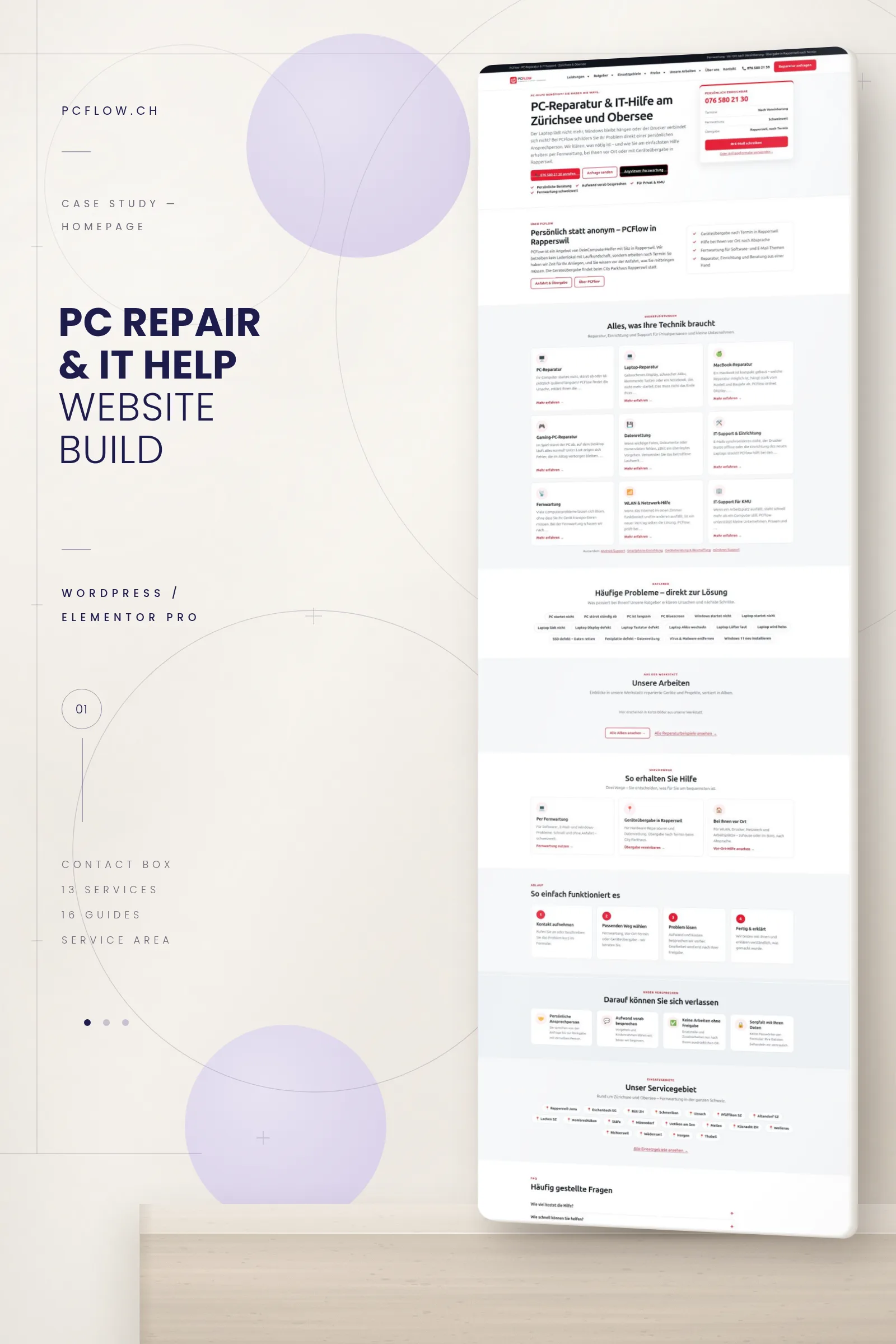
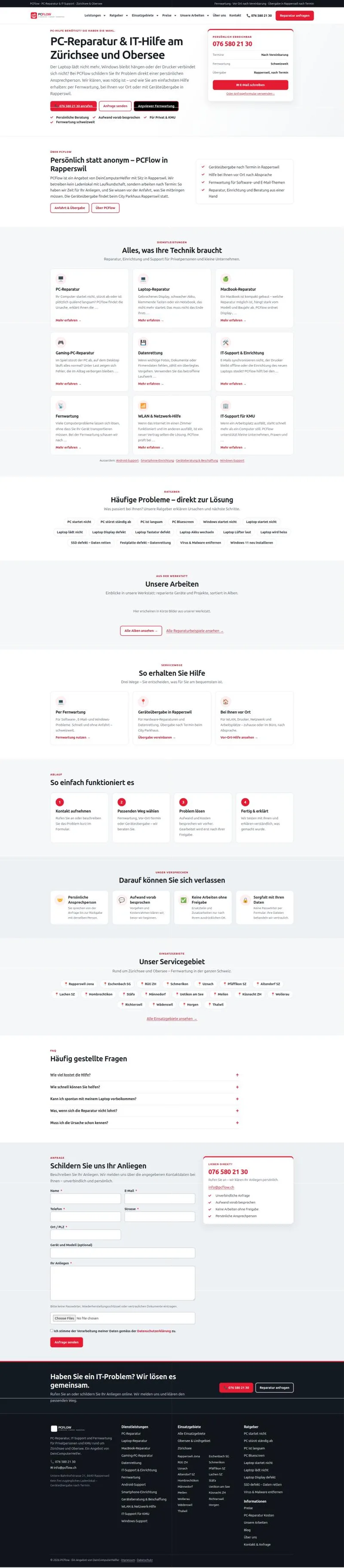
68-page WordPress and Elementor Pro website for a PC repair and IT support service, with a cost calculator, a repair request form and local area pages.
- Client
- PCFlow
- Service
- Website build
- Industry
- IT Infrastructure
- Timeline
- Oct 1 – 19, 2026
- Role
- Web Developer · WordPress Developer
Overview
PCFlow is a PC repair and IT support service in Rapperswil for private customers and small businesses around Lake Zurich and the Obersee. Customers can get help by remote support, on site, or by handing over their device in Rapperswil by appointment. I built the German-language website in WordPress with Elementor Pro, working from the client's page list and content package, and then delivered a round of client revisions.
What was built
- 65 pages created with the exact slugs from the page list, with "Startseite" set as the homepage
- 13 service pages, 16 troubleshooting guides, and service area pages for regions and 19 towns
- 8 repair case pages, plus an album gallery for the workshop ("Unsere Arbeiten")
- Prices page and a PC repair costs page
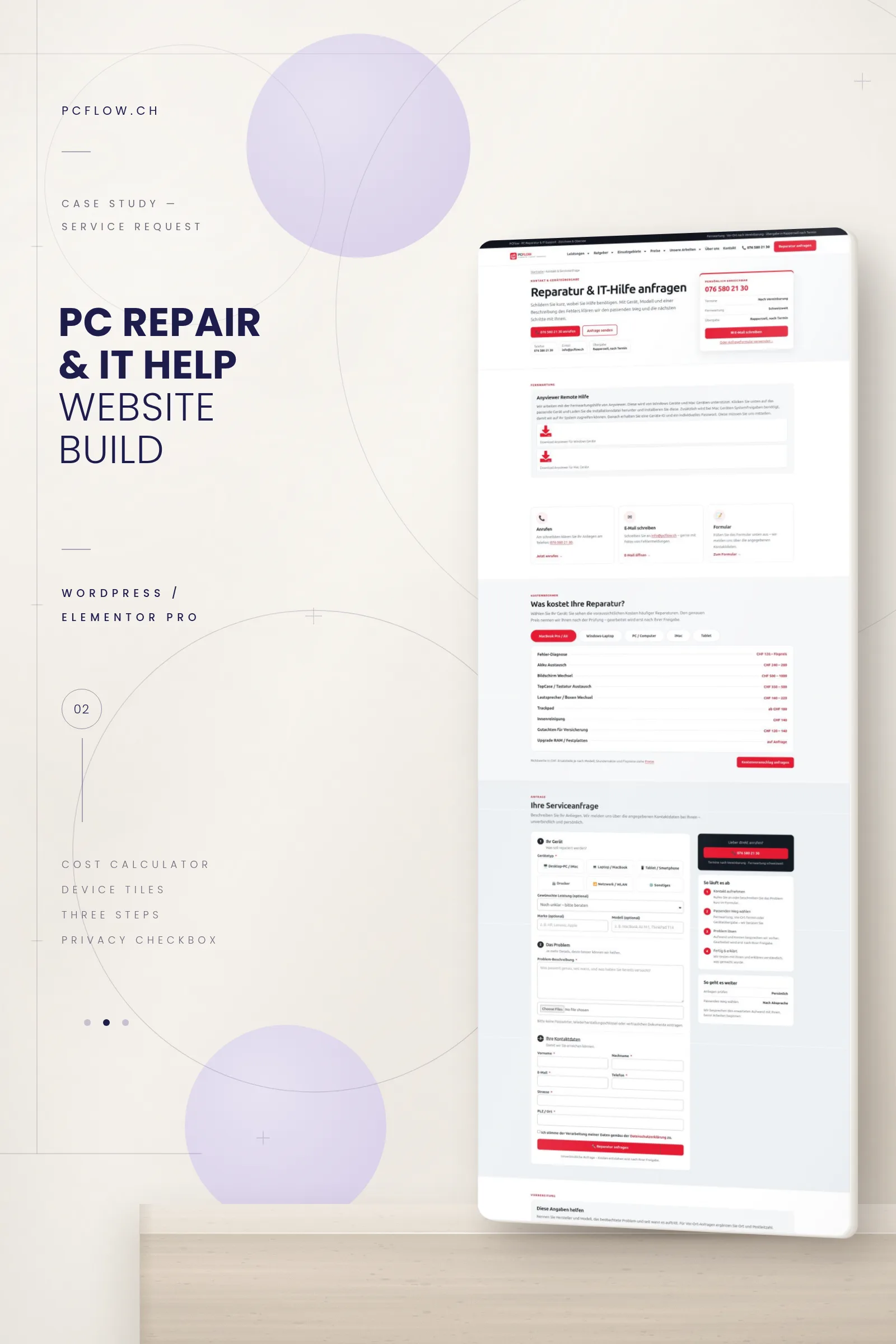
- Service request page with a cost calculator and a three-step repair request form
- Blog, Impressum and Datenschutz pages, added in the revision round
- Global header and footer, with a sticky header, dropdown navigation and a mobile menu
Tech review
I built the site in WordPress on the Hello Elementor theme, with Elementor Pro for the page layouts, the Theme Builder header and footer, and the forms. Yoast SEO handles the search setup.
Key build highlights
- 01
Global styles, set once
PCFlow's colours, typography, buttons and breakpoints live in Elementor's Site Settings, so every page draws from the same design system.
- 02
Editable without code
Every page uses classic Elementor widgets in flexbox and grid containers, with no Atomic elements and no HTML widgets. The client can change any text, link or image in the visual editor.
- 03
Reusable sections
Five parts that appear across the site are built once as templates:
- the hero contact box
- the contact card
- the enquiry form
- the "Darauf können Sie sich verlassen" trust section
- the list of all service areas
- 04
Navigation for a large site
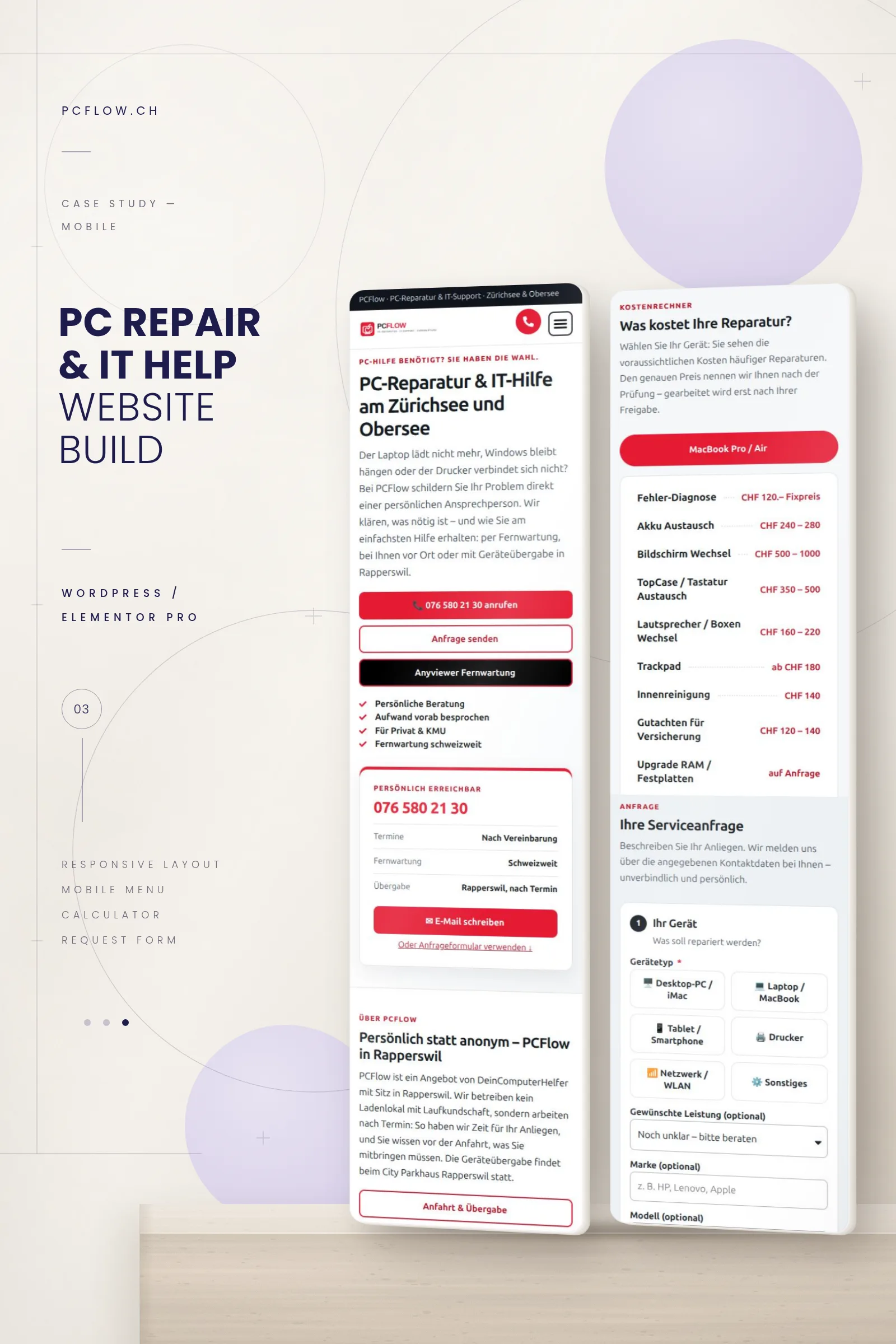
One main menu has dropdowns for services, guides, service areas (grouped by region, then town), prices and the workshop gallery. The header stays in view while visitors scroll and collapses into a mobile menu on phones.
- 05
Forms with spam protection and consent
The enquiry form is an Elementor Pro form with validation, a honeypot spam trap and German messages. Requests are emailed to the business and saved in Elementor Submissions. Every form includes a privacy consent checkbox.
- 06
Prices before the first call
The service request page gives visitors:
- a cost calculator with typical repair prices for five device types, alongside PCFlow's fixed diagnosis prices
- a three-step repair request form with device tiles, a sidebar and a privacy checkbox
- 07
A gallery the client can grow
"Unsere Arbeiten" lists albums on the homepage and on its own page. Each album gets its own page with a photo grid and slideshow, and the client adds new albums as normal posts.
- 08
Titles, H1s and a sitemap for 65 pages
Every page has its Yoast title and description from the content package and one H1, and the 65 pages are in the XML sitemap. The eight repair case URLs work through a private parent page, and /reparaturfaelle/ itself redirects to the gallery. The legal pages are hidden from search engines, as the package asks.
- 09
Client revisions
After the first review I added the Impressum and Datenschutz pages, a blog with templates for the post list and single posts, the new price content, the album gallery, the cost calculator and the multi-step request form. In the Datenschutz text I rewrote the contact-form paragraph so it matches how the real form works.
- 10
343 links checked before handover
I checked desktop, tablet and mobile layouts, links, anchors and the 404 page. In the final check all 68 pages loaded, and 343 internal links were tested with none broken.
The result
68 pages the client edits without code, and on each one a visitor can call, send a form or check a price first.
Gallery
Inside the project